
Refrigerated Chassis Thermal Analysis & Optimization

Methods: Thermocouples, IR Imaging, CFD
Led thermal characterization and optimization of Hyphen’s refrigerated ingredient storage system, with responsibility for achieving NSF compliance prior to customer deployment. Combined multi-point temperature testing, thermal imaging, airflow analysis, and CFD to identify cooling deficiencies and drive design improvements.
THE PROBLEM

The refrigerated chassis was failing NSF thermal testing, with several ingredient hoppers unable to maintain required food-safe temperatures. Testing and CFD revealed uneven cooling caused by restricted airflow, particularly in hoppers farther from the cold-air source.
Key Constraints:
• Dense Packaging
• Temperature Uniformity

THERMAL CHARACTERIZATION
To quantify chassis performance, I developed a multi-point thermal test setup using thermocouples distributed throughout the refrigerated volume and ingredient hoppers. The instrumentation captured spatial temperature gradients and transient cooling behavior under representative operating conditions.
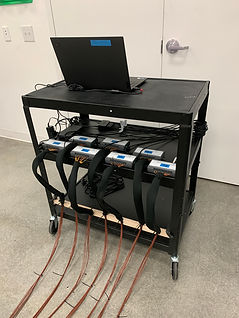
I built a multi-channel DAQ system (56 TCs) to monitor temperature.
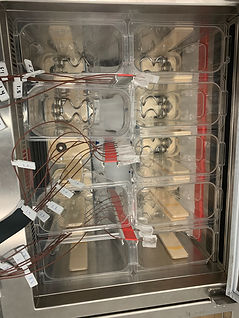
Ballistic gel used to simulate food temperatures during thermal testing.


ROOT CAUSE ANALYSIS
Correlated physical testing with CFD, thermal imaging, and smoke visualization to identify restricted airflow, recirculation, and leakage paths responsible for uneven cooling.


DESIGN OPTIMIZATION
Based on thermal testing and CFD analysis, I implemented several changes to improve cooling performance:
-
Airflow Channels — Redesigned hopper and cabinet airflow paths to improve cold-air circulation
-
Air Divider / Baffle — Added baffling to create a circulation path between the cold-air supply and return.
-
Thermal Isolation — Improved cabinet sealing, added barriers between hot & cold zones to reduce heat transfer.

OUTCOME - NSF/ANSI 4 PASSED

These improvements enabled the system to meet NSF/ANSI 4 temperature requirements and supported safe deployment of the automated makeline to customer locations.